Authentically Authoring in the Age of Tropes
How does an author describe their book with tropes when it was written without specific tropes in mind?
How do you go about choosing your next read? Your next series? Which lucky author gets a slice of your time and a few bucks of your hard earned money?
You could run a quick search, keep track of your bookshelf on Goodreads, let Amazon’s suggestions for comparable titles fill up your TBR, or see what the next big BookTok or Bookstagram sensation is. Perhaps you frequently see ads, all of which look like basically the same cut-and-paste templates, with worn out themes and predictable storylines.
Genre 💎 Tropes 💎 Comps
Many authors have fallen into the way of feeding the algorithm because that’s the only way the algorithm will see them; if they don’t market their book using methods the social media app expects, how will they ever find their audience?
And here’s the thing—they’re not wrong.
Because marketing with tropes has unfortunately become the industry standard. With millions of books published each year (thousands of which are AI generated), drawing attention to your book has begun to feel downright impossible. Do you have a compelling premise? Sure. Are your main characters interesting, flawed, relatable, kick-ass? Absolutely. Is the setting well-built, believable, immersing the reader in a world that feels like they could step through the pages and literally be in a whole other dimension? You betchya.
But how do you describe that to a reader who is inundated with lists of literary works that range from masterpieces to absolute garbage? How do you guarantee the reader that you’ll deliver on the promises if you don’t even know how to make those promises in the first place?
Well, your elevator pitch is your first introduction to your work.
Next, your blurb should give them a fuller idea of what the story actually entails, highlighting the first point of tension without giving away too much in the process (I mean, they’ve got to want to read the book, after all).
Finally, your cover art should be expertly handled (by professionals, let’s be honest), communicating the genre, the overarching themes, and elicit an emotion, whatever that may be.
Interestingly, I don’t include the title in the marketing list after the book is completed—I believe your title (and subtitle or series name, for that matter) should be well-thought-out before you finish writing. A placeholder is fine for a time, but you should have an idea what your main conflict is, the main character’s ultimate desire/flaw, a central plot theme, etc, and I believe your title should reflect this. Formulaic titles that follow a popular trend don’t tell me much about your book, and they lead me to think that you’re following the trend rather than writing a story that is unique enough to be given the thought and care that it deserves.
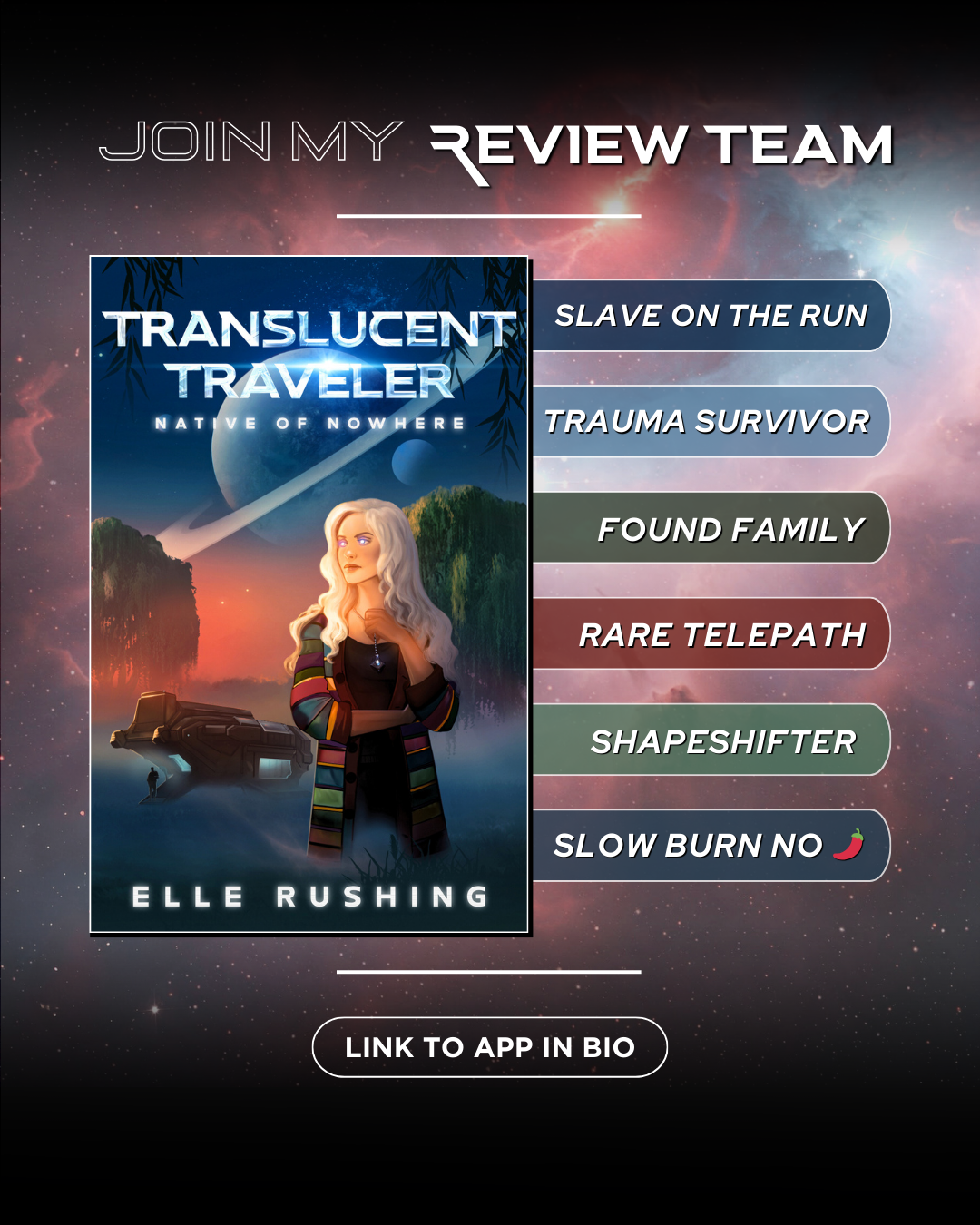
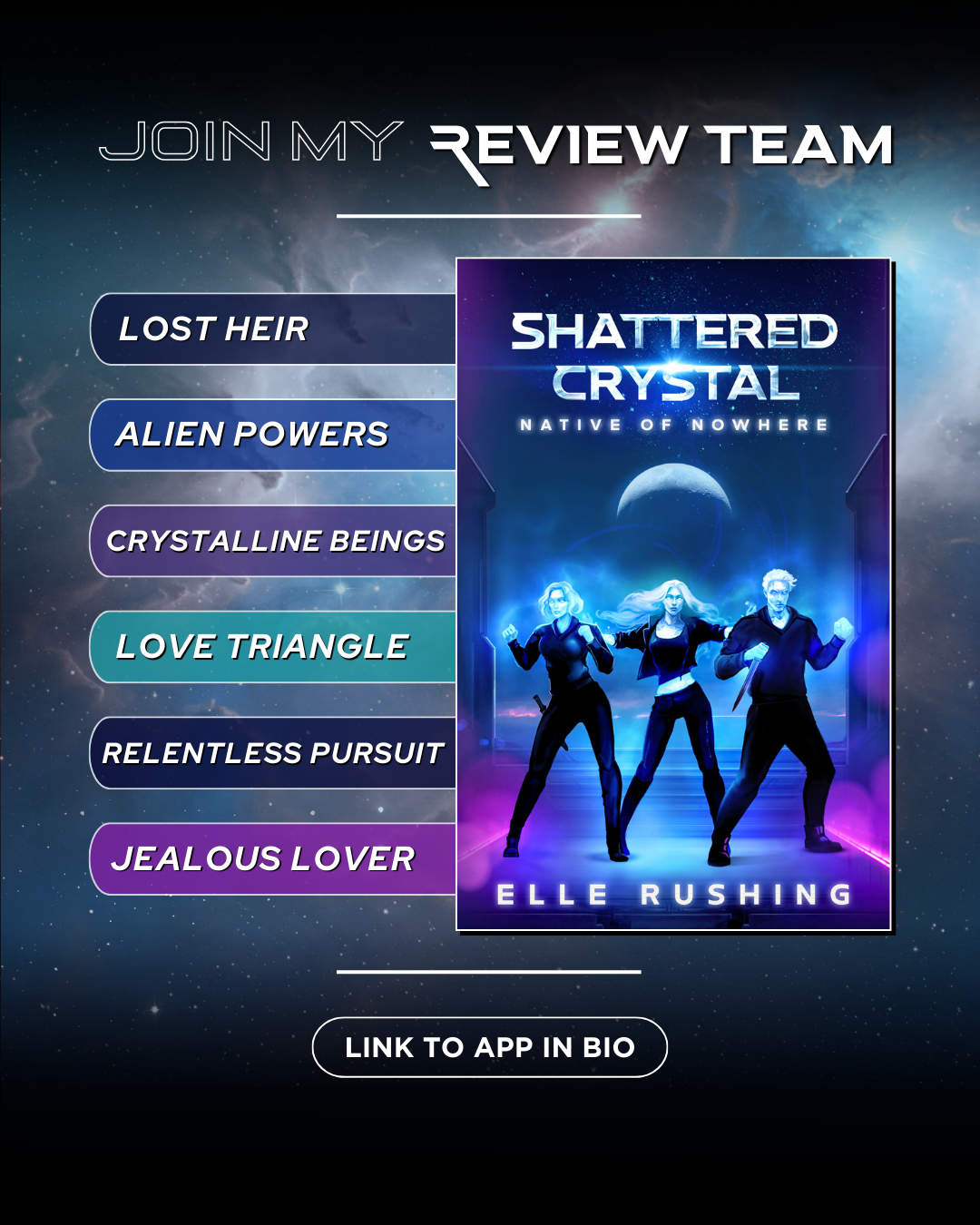
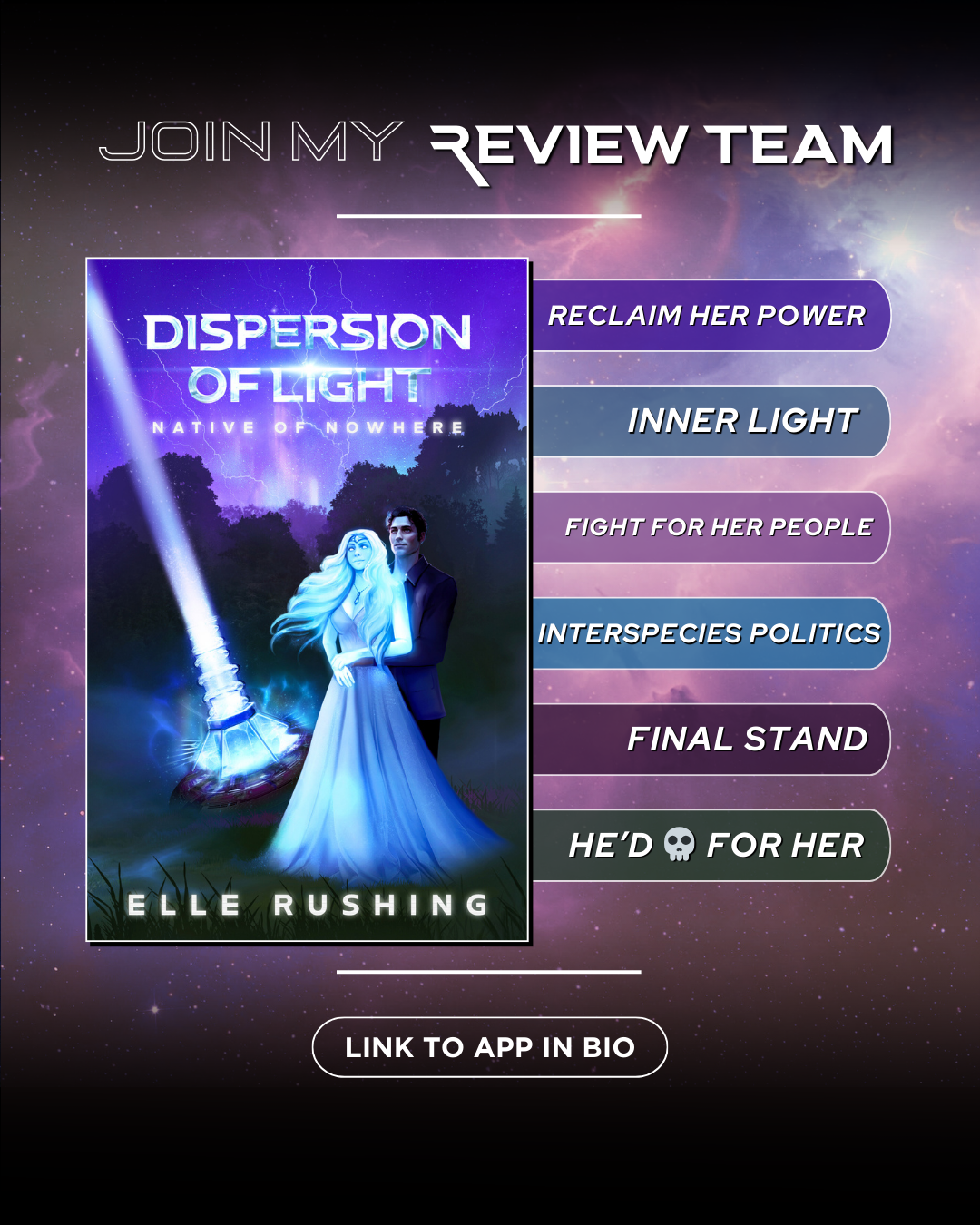
The most clever titles, imo, tell you something profound, make you think, make you do a double take. For example, I wrote my debut trilogy with the following structure, based upon the central themes the story promises to deliver:
Series Name: Native of Nowhere—Kit is lost, on her own, on the run, and has no family to return to. At first, she isn’t even sure that any of her people survived the final attack on her home world, when she was abducted by slavers and sold into a life of service to the rich, greedy human men of the galaxy. Readers can identify with themes of not belonging, feeling alone, left behind, hiding their true selves, and not daring to hope that ‘home’ could ever be found.
Book 1: Translucent Traveler—Kit is different, but it’s unclear why, outside of the obvious: she’s a telepath and a shapeshifter. But when Malcolm discovers the truth she hides behind her human skin, he’s astonished by her inner beauty, the honesty and kindness, her generosity, the light that is reflected in her pale blue gray diamond eyes and the depths of her soul. This stands in stark contrast to her former ‘master’, the man who forced her to show her true self and wishes for nothing more than to own her and to possess that beauty for himself.
Book 2: Shattered Crystal—Kit finds her way back to her people, learns of her station, and decides to step up and support this community of survivors. In the process, however, she learns how dangerous this actually is, and finds herself exposed once more, cornered by the cruelty of the humans, their disregard for the autonomy of her people, and for life itself. The unexpected consequences nearly shatter her will to continue on, and she’s saved from spiraling out only by Malcolm’s loving care—the one who sees and values her true self more than any other.
Book 3: Dispersion of Light—Pulled back from the brink of utter despair, Kit seeks out her home world, while requesting legal recognition and support from the galaxy’s Central Government. Not only are the themes of light especially important here, they are physically real, and emotionally symbolic: Kitania steps fully into her power, chooses to face her abuser, and shares the ‘light’ that only she can. If she cannot restore House Grey to the Lucarn people, no one can. While they all look to her for strength and stability, Malcolm quietly anchors her, despite the fact that he has none of the abilities she has. He believes in her, and that power alone helps her shine brighter than she ever thought possible.
So no, I didn’t write my stories to fit into any particular ‘tropes’, I wrote them as a way of communicating the uniqueness of every one of us, the strength we have within our hearts, the pure and blinding light of our souls, and the unbelievable power that true love and support can bring out from the depths of our very being. Communicating all of that in simple ‘tropes’ just isn’t possible.
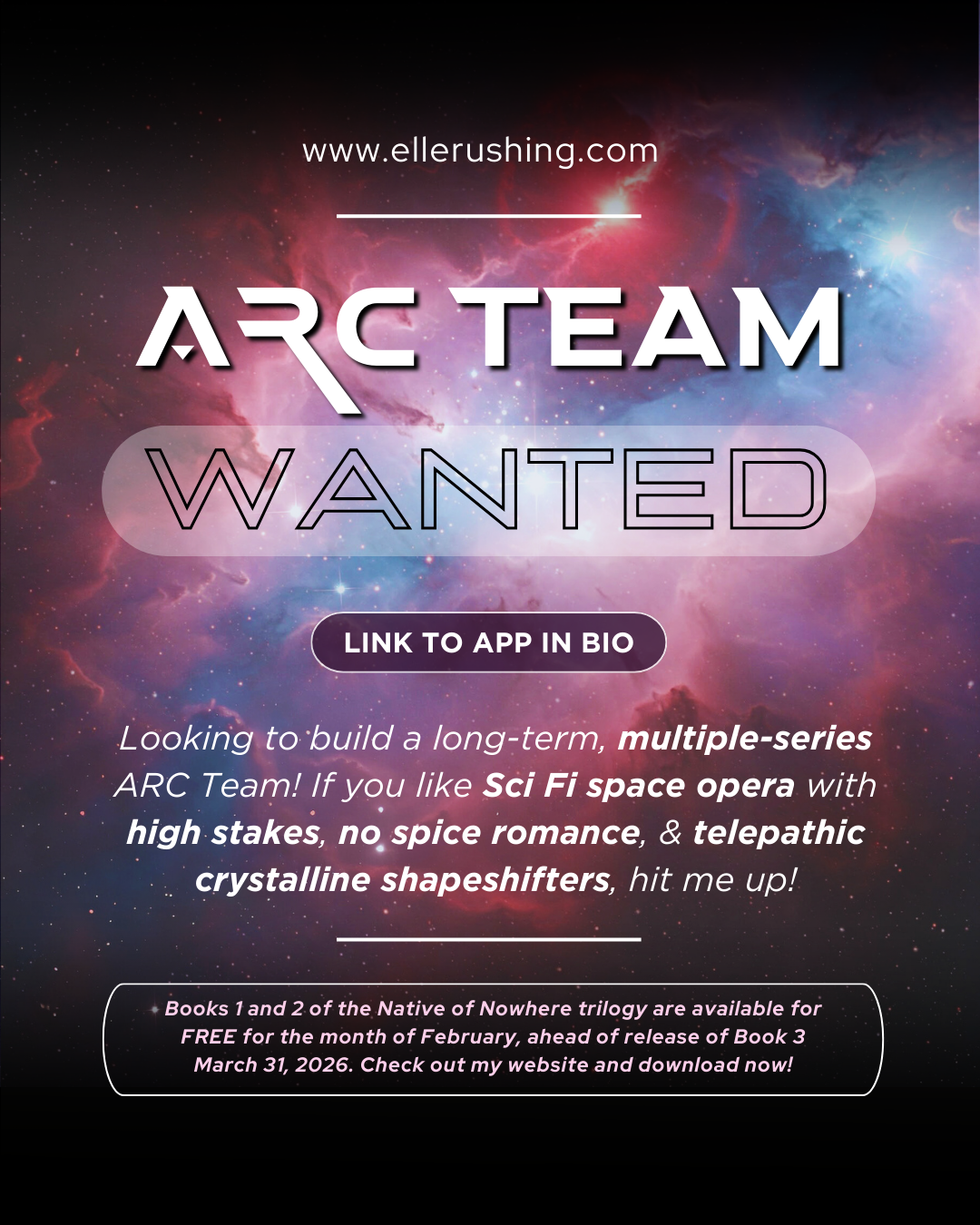
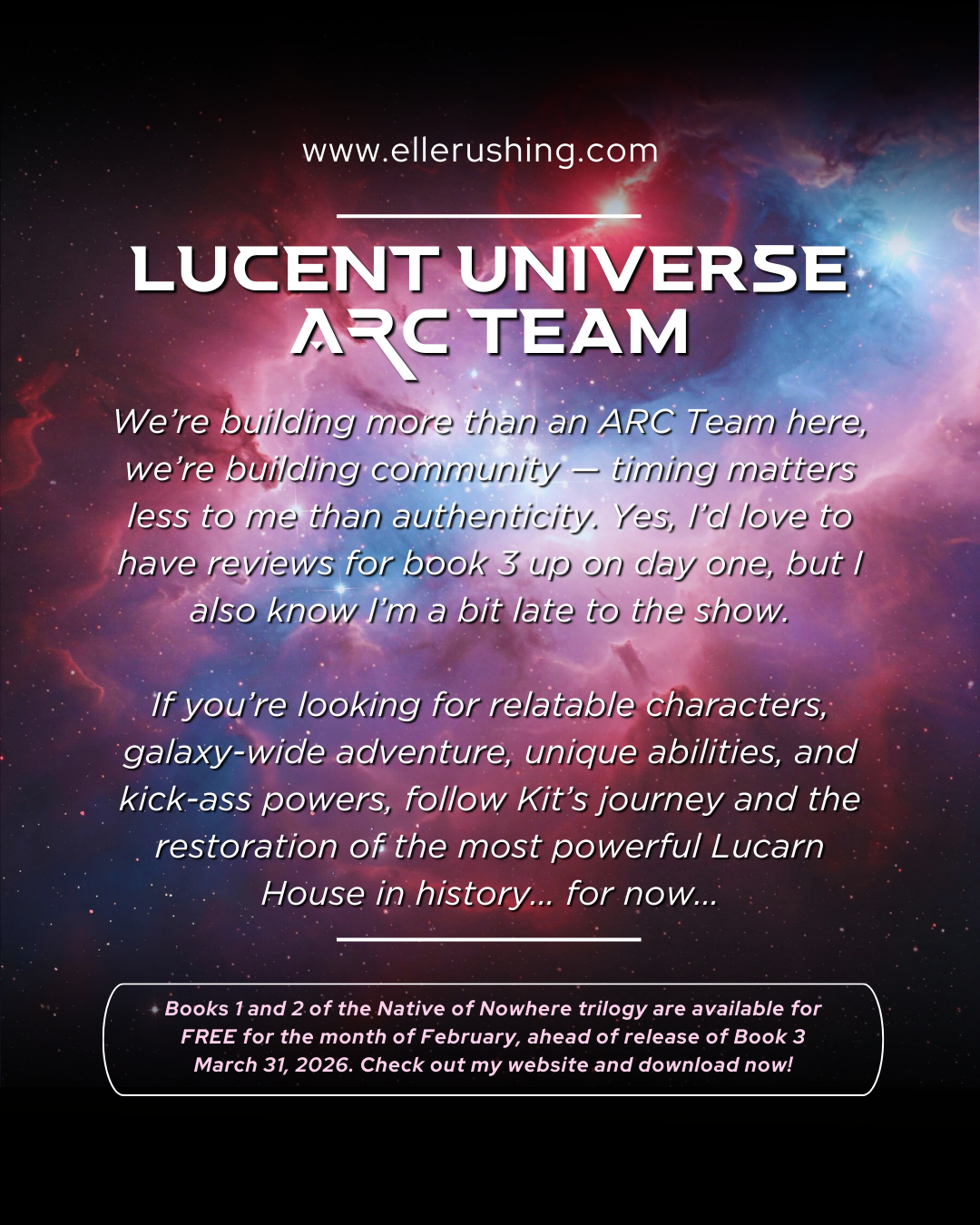
Buuuuut… I’ve got to do it. So, below you’ll find my attempts at giving an idea of what my stories entail at a glance, along with links to my ARC Team application. There you’ll find a series blurb along with some common ‘tropes’ or story themes, a link to my YouTube video with a more detailed overview, and the application itself. If you’re interested in learning more about Kit’s journey (and enjoying the Native of Nowhere trilogy as an introduction to the Lucent Universe), check it out.
Because my stories may not fit neatly into a simple list of ‘tropes’, but the themes of chosen family (the mature big sister of ‘found family’), learning to value what you carry inside of you, and learning to stand up for yourself even when the villain is galaxies more powerful outwardly than you think you’ll ever be, are important. YOU are important. And you deserve to feed your mind and your soul with something deeper than a list of tropes could ever give—trust in yourself, those who love you, and in the beauty you possess, no matter how broken and shattered you may feel.
💎 so shine on you crazy diamond 💎